


Training a service dog is one of the most meaningful — and most demanding — commitments a dog and handler can undertake. At The Service Dog Team Academy, we’ve built a structured, step-by-step program that takes your dog from foundational obedience all the way through task-specific work, Canine Good Citizen certification, and real-world public access. Our lead trainers, Valerie Fry and Keisha Tucker, bring decades of combined experience, nationally recognized certifications, and a deep understanding of what handlers with disabilities actually need from their dogs.
We are fully bonded and insured. While your dog is in public with us, we assume full responsibility — as long as the location is pre-approved. Every step of our program is built around safety, consistency, and results that last.
Who Qualifies for a Service Dog?
Under the Americans with Disabilities Act (ADA), a service dog is a dog that has been individually trained to perform specific tasks directly related to a person’s disability. This includes physical disabilities, sensory impairments, psychiatric conditions, intellectual disabilities, and other health conditions. The dog must be task-trained — meaning it performs a specific, learned behavior that mitigates the handler’s disability.
Service dogs are distinct from emotional support animals (ESAs) and therapy dogs. ESAs provide comfort through their presence but are not task-trained and do not have the same public access rights under the ADA. If you’re unsure whether a service dog is the right fit for your situation, contact us — we’re happy to walk you through your options.
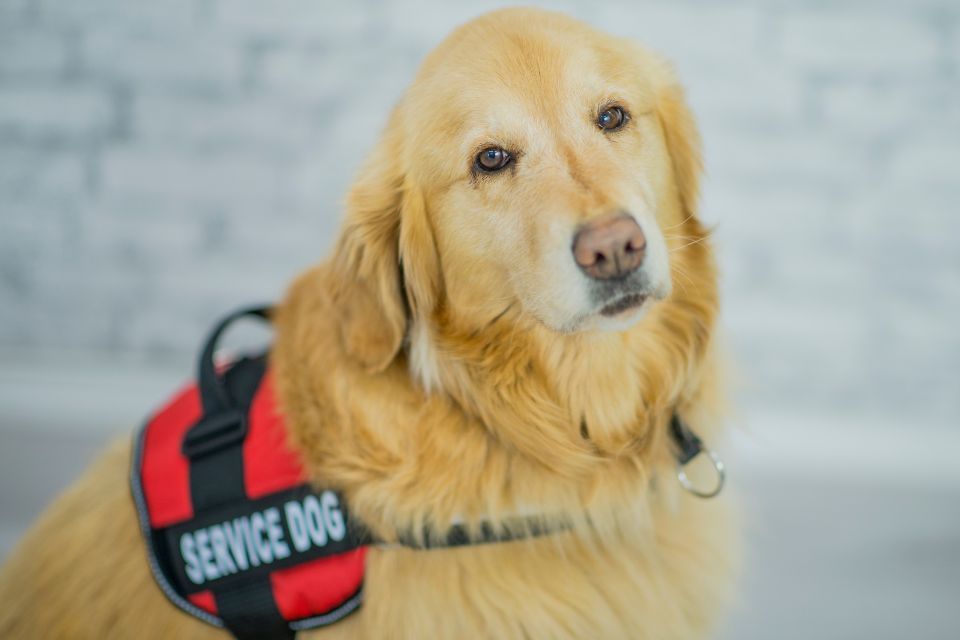
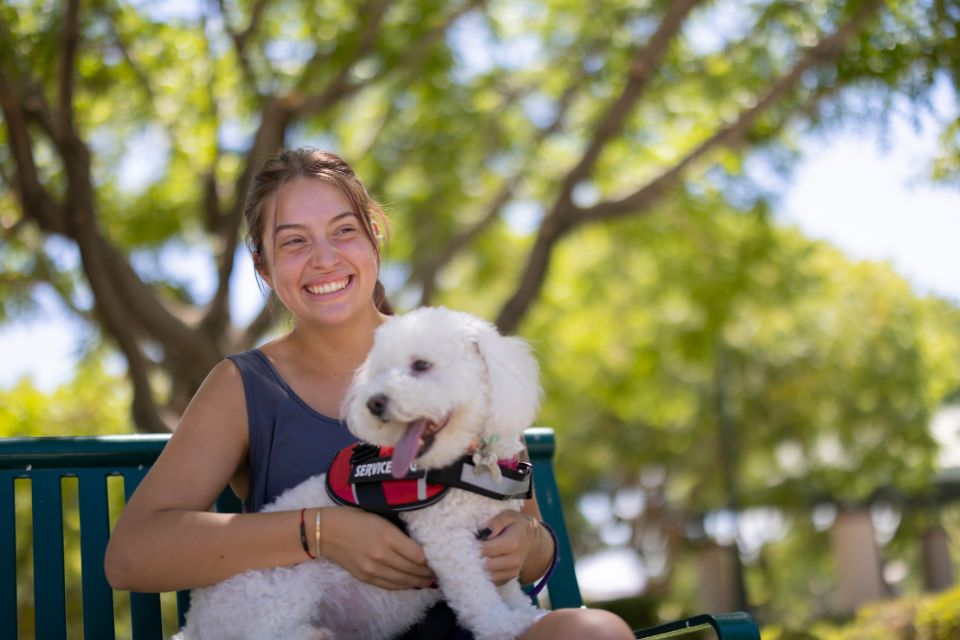
Our Service Dog Training Pathway
Our program is structured in a clear progression. Each phase builds on the last, and your dog doesn’t advance until they’re genuinely ready. Here’s how it works:
Phase 1: Board & Train Foundation
Most clients start with our two-week Board & Train program. Your dog lives with our trainer in a home environment and builds a solid foundation in obedience — sit, down, stay, wait, leave it, loose-leash walking, potty training, bite inhibition, and structured routine. This phase costs $1,950, with a $200 non-refundable deposit to reserve your spot.
If your dog already has a solid obedience foundation, you may be able to skip Phase 1 and move directly into task training. Contact us to discuss your dog’s current skill level.
Phase 2: Weekly Public Training Sessions
After Board & Train, your dog begins weekly training sessions out in public — real-world environments where focus, reliability, and task performance actually matter. These sessions are where you work alongside your dog under our guidance. You learn how to handle, cue, and support your dog in public settings. Follow-up sessions are billed at $600 per four sessions.
Phase 3: Canine Good Citizen (CGC) Certification
CGC is a 10-step AKC evaluation focused on socialization, manners, and handler control. It’s a milestone in our program — and both Valerie and Keisha are certified AKC CGC Evaluators, meaning they administer the test themselves. Once your dog passes CGC, they earn expanded public access privileges including plane travel and access to additional approved locations.
Phase 4: CGC Urban & Task Training
CGC Urban takes the CGC skills into more complex urban environments — busier settings, more distractions, higher standards. From there, we move into task-specific training tailored to your disability and daily needs. Task work varies by handler: mobility assistance, medical alert, psychiatric service dog tasks, scent-trained tasks, and more.
The task training phase is structured in packages of 12 sessions for $1,950. Most handlers require two packages (24 sessions, $3,900) to complete the full curriculum.
Texas Law and Public Access Rights
In Texas, Service Dogs in Training (SDITs) have the same public access rights as fully trained service dogs. That means your dog has public access from the moment they complete our Board & Train program and begin working toward certification — not just after they’ve finished the full training process. This is a significant benefit for handlers who need to begin integrating their dog into daily life early in the training journey.
Why Choose The Service Dog Team Academy
- Certified trainers: Valerie holds her KPA CTP, ABCDT-L2, and CLASS certifications. Both Valerie and Keisha are AKC CGC Evaluators and APDT members.
- Licensed counselor on staff: Keisha is a Licensed Chemical Dependency Counselor (LCDC) — an unusual and valuable credential for a service dog program that works with veterans and handlers with psychiatric disabilities.
- Bonded and insured: We assume full responsibility for your dog during all approved public access training.
- Real-world training: Every phase of our program involves public access work, not just controlled indoor sessions.
- Clear pathway: We don’t leave you guessing about what comes next. Each phase has defined goals, and your dog advances when they’re genuinely ready.
- Handler-centered approach: We train you alongside your dog. A service dog is only as effective as the team they’re part of.
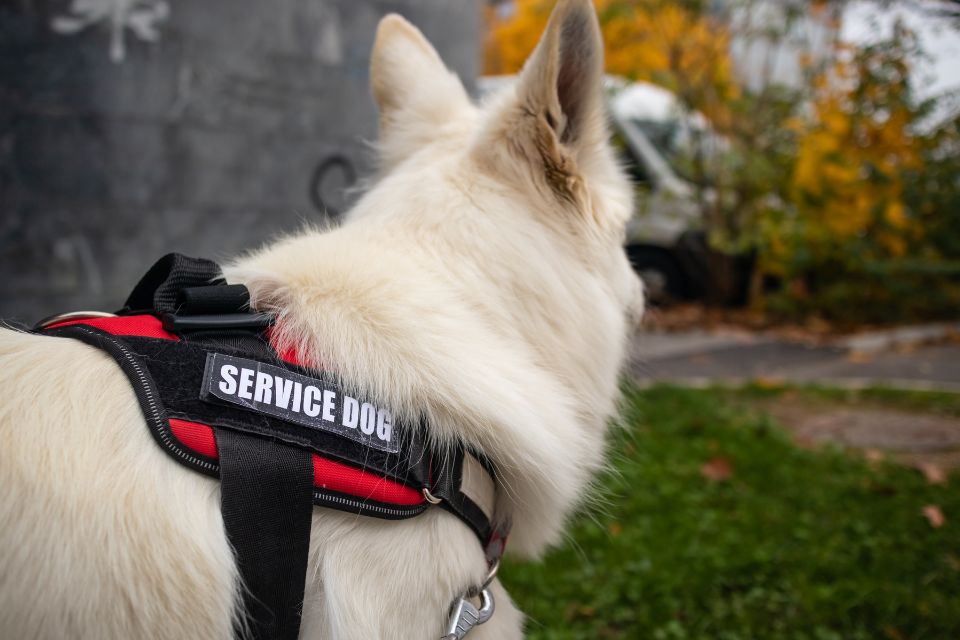
Service Dog Training FAQs
How long does it take to train a service dog?
The full process typically takes 12 to 24 months depending on the dog, the handler’s needs, and the complexity of the tasks being trained. The foundational Board & Train phase is two weeks, followed by ongoing weekly public training sessions. Task training is structured in packages of 12 sessions, and most handlers complete two packages before finishing the full curriculum.
Can I train my own dog to be a service dog?
Yes — under the ADA, you are legally permitted to train your own service dog. You do not need to use a professional program. However, the training standards required for a reliable, task-trained service dog are high, and most owner-trainers benefit significantly from professional guidance. Our program is designed specifically for owner-trainers who want professional support throughout the process.
What is the difference between a service dog and an emotional support animal?
A service dog is task-trained to perform specific behaviors that directly mitigate a handler’s disability and has full public access rights under the ADA. An emotional support animal (ESA) provides comfort through companionship but is not task-trained and does not have the same public access rights. ESAs are protected under fair housing law but not the ADA. Therapy dogs are trained to provide comfort to others in settings like hospitals or schools — they are not service dogs.
Does a service dog need to be certified or registered?
No. Under the ADA, there is no official government certification or registration required for a service dog. Online registries that sell certificates or vests are not legally recognized. What matters is that the dog is trained to perform specific tasks related to the handler’s disability and is under control in public. Our program works toward AKC Canine Good Citizen certification as a meaningful, verifiable benchmark — but CGC is a training milestone, not a legal requirement.
What tasks can a service dog be trained to perform?
Tasks vary based on the handler’s disability and needs. Common examples include: mobility assistance (bracing, retrieving dropped items, opening doors), medical alert (alerting to seizures, blood sugar changes, allergens), psychiatric service dog tasks (interrupting anxiety or PTSD episodes, creating space in crowds, room checks), and scent-trained tasks. We tailor task training to each handler’s specific situation.
What breeds make the best service dogs?
There is no single best breed — temperament and trainability matter far more than breed. Golden Retrievers, Labrador Retrievers, and Standard Poodles are commonly used due to their focus, trainability, and temperament, but many breeds and mixed breeds make excellent service dogs. We assess each dog individually. The most important factors are a calm, stable temperament, good focus, and the physical ability to perform the required tasks.
Can my dog start public access training right away?
In Texas, yes — Service Dogs in Training (SDITs) have the same public access rights as fully trained service dogs under state law. Your dog can begin public access training immediately after completing our Board & Train program. Public training is a core part of our program from Phase 2 onward, because real-world reliability is the whole point.
How much does service dog training cost?
Our Board & Train foundation phase is $1,950 with a $200 non-refundable deposit. Follow-up public training sessions are $600 per four sessions. Task training is structured in packages of 12 sessions at $1,950 per package — most handlers complete two packages ($3,900 total) to finish the full curriculum. If your dog already has a solid obedience foundation, you may be able to skip the Board & Train phase and begin directly with task training sessions.
Do you work with veterans or people with PTSD?
Yes. We have experience training psychiatric service dogs for veterans and civilians dealing with PTSD, anxiety, and other psychiatric disabilities. Keisha Tucker, our co-owner, is also a Licensed Chemical Dependency Counselor (LCDC) — which gives her a unique understanding of the challenges many of our clients face. We approach every handler’s situation with the care and discretion it deserves.
How do I get started with service dog training?
Start by reaching out through our contact page or calling us at (469) 786-7877. We’ll talk through your situation, assess whether your dog is a good candidate, and walk you through which phase of our program makes sense for where you’re starting. If you’re beginning from scratch, we’ll recommend starting with our Board & Train program. If your dog already has solid obedience skills, we may be able to move directly into task training.