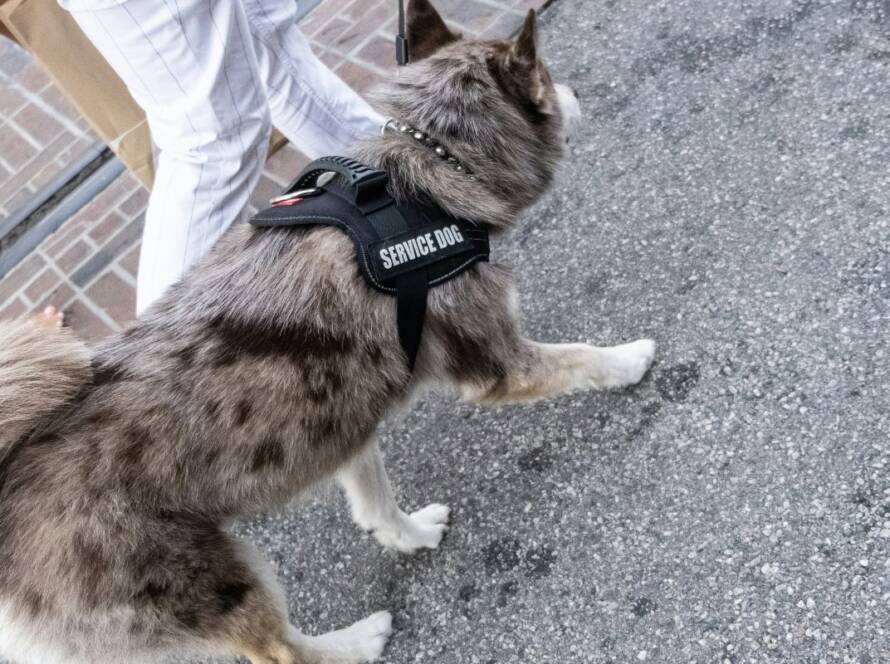
Figuring out how to get a service dog in Texas starts with understanding a distinction most people miss: a service dog isn’t defined by a vest, a certificate, or a registration number. It’s defined by training. Under federal law, a service dog is a dog individually trained to perform specific tasks for a person with a disability — and that single requirement shapes everything else about the process, from eligibility to public access rights.
This guide walks through exactly what qualifies, what doesn’t, and the realistic steps involved in getting a service dog ready to work in Texas.
What Legally Qualifies as a Service Dog Under the ADA
The Americans with Disabilities Act (ADA) defines a service dog as a dog trained to perform specific tasks directly related to a person’s disability. That’s the entire legal bar — there’s no federal registry, no mandatory certification, and no required vest or ID card. What matters is the training the dog has actually received and the tasks it can reliably perform.
This is also where a lot of confusion starts, since service dogs are frequently lumped in with emotional support animals. They’re not the same thing legally, and the distinction affects where the dog is allowed to go. Our breakdown of service dogs vs. emotional support animals covers exactly where that line is drawn.
Do You Need a Diagnosed Disability?
Yes. The ADA defines a disability as a physical or mental impairment that substantially limits one or more major life activities. This covers a wide range of conditions — mobility impairments, diabetes, seizure disorders, PTSD, severe anxiety disorders, and more — but the dog’s tasks have to be tied directly to that disability. A dog that provides comfort simply by being present doesn’t meet the task-trained standard; a dog trained to interrupt a panic attack, retrieve medication, or alert to a blood sugar drop does.
What Tasks a Service Dog Must Be Trained to Perform
Task training is specific and disability-related. Examples include:
- Retrieving medication or a phone during a medical event
- Alerting to seizures, low blood sugar, or panic attacks before they escalate
- Providing balance support or bracing for a mobility impairment
- Interrupting repetitive or self-harming behaviors
- Guiding a handler with a visual impairment around obstacles
General good behavior — calmness, friendliness, sitting quietly — is necessary but not sufficient. For more on why task training changes a dog’s role so significantly, see why service dogs are life-changing.
Step-by-Step: How to Get a Service Dog in Texas
Step 1: Confirm Your Eligibility
Before starting training, confirm that your condition meets the ADA’s definition of a disability and identify the specific tasks a dog could perform to mitigate it. This is worth discussing with your healthcare provider, even though the ADA doesn’t require a doctor’s letter for public access.
Step 2: Decide Between Owner-Training and Professional Training
Texas, like the rest of the U.S., allows owner-trained service dogs — there’s no legal requirement to use a professional program. That said, professional guidance dramatically increases the odds of success, particularly for public access reliability. Working with certified dog trainers in DFW gives you a structured path instead of trial and error.
Step 3: Begin Task-Specific Training
This is the core of the process, and it takes real time. Our guide on how long it takes to train a service dog sets realistic expectations, and consistent training at home is what makes the difference between a dog that performs tasks reliably and one that only performs them in a training session. Method matters here too — positive reinforcement training builds the kind of trust and reliability a working service dog needs.
Step 4: Complete Public Access Training
Task training and public access training are two different skill sets. A service dog also needs to remain calm and unobtrusive in grocery stores, restaurants, and crowded public spaces regardless of distractions. Our post on public access training for service dogs covers what this actually involves and why skipping it is one of the most common reasons a service dog gets asked to leave a business.
Step 5: Understand Your Rights and Responsibilities in Public
Once your dog is task-trained and public-access ready, businesses in Texas are generally permitted to ask only two questions: whether the dog is a service animal required because of a disability, and what task the dog is trained to perform. They cannot ask about your diagnosis or demand documentation. That said, a service dog that behaves disruptively can legally be asked to leave — another reason public access training isn’t optional.
Texas-Specific Considerations
Texas law generally mirrors the ADA on service dog access, but state law also makes it a criminal offense to misrepresent a pet as a service animal in order to gain public access. This is part of why legitimate task training matters beyond just your dog’s performance — it protects access rights for people who genuinely need them.
Working With a Professional Program
If owner-training feels overwhelming, or you want a faster, more reliable path to a working service dog, a structured program shortens the timeline considerably. Our service dog training program covers task training and public access work from the ground up, and you can learn more about our team’s background on our about us page.
Areas We Serve Across DFW and Texas
The Service Dog Team Academy is based in Rockwall, TX, and works with handlers throughout Dallas, the greater DFW Metroplex, Plano, McKinney, Forney, Allen, Frisco, and Lavon. Visit our full range of training services to see which program fits your dog and your area.
Frequently Asked Questions
Do I need a doctor’s note to get a service dog in Texas?
No formal documentation is legally required for public access under the ADA. However, confirming your eligibility with a healthcare provider is a reasonable and often practical first step before investing time in training.
Can I train my own service dog in Texas?
Yes. Owner-training is legal, and there’s no requirement to use a professional program. Many owners still choose professional guidance because public access reliability is difficult to achieve without structured training.
Is there an official service dog registry in Texas?
No. There is no official state or federal registry for service dogs. Any website selling “official” registration or certification is not a legal requirement and does not grant any additional rights.
How long does it take to get a service dog ready in Texas?
Timelines vary by task complexity and the dog’s starting point, but most service dogs need between six months and two years of combined task and public access training before they’re fully reliable in public settings.
Can a business ask what my disability is before allowing my service dog inside?
No. Businesses may only ask whether the dog is a service animal required because of a disability and what task it’s trained to perform. They cannot ask about your specific diagnosis or request documentation.
Ready to start the process the right way? Contact The Service Dog Team Academy to talk through eligibility, task training, and what a realistic timeline looks like for your situation.